


There’s a lot to think about before trying to get pregnant. You’ll want to start taking a prenatal vitamin, check your medications to make sure they are pregnancy-safe, and ensure you’re eating a balanced diet. It may also be time to finally make that doctor’s appointment you’ve been putting off to discuss your family health history, how any existing conditions may need to be managed during your pregnancy, and any symptoms you are currently experiencing. But some people are adding something else to their checklist: getting a pre-pregnancy whole body MRI.
What is preconception care?
Many people only start to think about certain health decisions once they get a positive pregnancy test. But when it comes to preparing your body for a pregnancy, the set of health steps you take in the months before you try to conceive is also important.
The American Society for Reproductive Medicine stresses that the goal behind preconception health is to help reduce pregnancy risks for the parent, fetus, and newborn by optimizing health and addressing modifiable risk factors ahead of time. It also highlights that conditions like diabetes, hypertension, and thyroid disease can affect pregnancy outcomes but are often easier to manage before conception. That’s why the months leading up to pregnancy can be an important time to check in on your health.
A great way to get started is with a preconception visit. During this scheduled visit, you and your healthcare provider can discuss:
- Your personal and family medical history
- Any health conditions you have
- Medications you take
- Details about previous pregnancies
- Vaccination records
- Insights from any health screenings
- Lifestyle factors like diet, exercise, smoking and alcohol use that may impact pregnancy
Related: Preconception planning: Health factors to consider
Preconception may also be a good time to talk with your healthcare provider about bloodwork. Depending on your individual health and risk factors, testing may help identify concerns such as anemia, nutrient deficiencies, or thyroid dysfunction that could be important to address before pregnancy.
Blood tests can measure things an MRI can’t, such as hormone levels, blood cell counts and certain nutrient levels. Prenuvo Blood Panels can provide additional insights into biomarkers related to metabolic and thyroid health, hormones, nutrients, cardiovascular health and more. When paired with imaging, these results can help create a more complete picture of your health.
Related: What happens when you combine whole body MRI and blood work?

Why are some people considering a whole body MRI before pregnancy?
Pregnancy comes with many more changes than just weight gain. It can impact everything from your digestion—leading to issues like constipation or heartburn—to your sleep, breathing, bladder control, venous system, and beyond. This can place additional demands on the body and may exacerbate some existing health conditions. Thus, many organizations recommend optimizing your health and managing existing conditions before pregnancy occurs. For some people, there’s also an appeal to learning about a potential health issue before pregnancy, when there may be more time to investigate it and discuss next steps with a healthcare provider.
Related: What becoming a parent can do to your body
A whole body MRI before pregnancy can provide deeper insights into your health and may help you to identify a potential health concern, even without symptoms occurring. Prenuvo’s Whole Body Scan uses MRI to check in on your major organs and systems, including the brain, spine, abdomen and pelvis. Instead of focusing solely on reproductive health, it can provide information about other areas of your body and potentially identify findings that may warrant additional evaluation. This can provide you with valuable insights that may help you focus on optimizing your health before conception, whether that’s altering your exercise routine, changing your diet, or monitoring a condition with your healthcare provider.
Getting a whole body MRI before pregnancy can also provide you with a baseline of your pre-pregnancy health. Think of it as a snapshot of where your health stands at this particular point in time, which you can use as a point of comparison in the future. Pregnancy and childbirth can bring many changes to the body, so having a baseline can also give you a way to compare your health before and after pregnancy and see how it changes over time.
For people who want to establish a more detailed health baseline before pregnancy, Prenuvo also offers dedicated assessments of brain health, heart function and body composition. These assessments add measures that a Whole Body Scan does not provide, including brain volume and blood flow, heart muscle function, visceral fat and muscle mass. While they do not assess fertility, they can create more specific reference points for understanding and tracking your health over time.
Related: The new proactive health standards for women
Can MRI identify conditions that may affect fertility?
A whole body MRI before pregnancy is not a screening test to tell you whether or not you’re fertile. But it might help detect certain conditions involving the reproductive organs that can affect fertility or pregnancy. These may include:
Uterine fibroids: Noncancerous growths of muscle tissue in the uterus. Depending on their size or location, they may affect fertility by changing the shape of the uterine cavity, blocking the fallopian tubes, or preventing a fertilized egg from implanting. An MRI can help provide more clarity on the size and location of fibroids.
Endometriosis: A condition where tissue similar to the lining of the uterus grows outside of the uterus, in areas like the ovaries, fallopian tubes, and outer surface of pelvic organs. Many women with endometriosis can get pregnant, but it can make it more difficult for some. This is believed to occur when patches of endometriosis tissue block or alter the shape of the reproductive organs, the immune system attacks the embryo, or the lining of the uterus where an embryo implants fails to develop properly. A whole body MRI may help detect some signs of endometriosis, including ovarian cysts associated with the condition and areas where endometriosis has grown deeper into pelvic tissue or nearby organs. However, a scan cannot rule out the presence of endometriosis even if it exists, and findings may warrant additional testing.
Adenomyosis: Tissue similar to the uterine lining grows into the muscular wall of the uterus. This can cause the uterus to thicken and enlarge. The condition has been associated with fertility problems and pregnancy complications, and MRI can help identify characteristic changes within the uterus.
Hydrosalpinx: A condition where a fallopian tube becomes blocked and fills with fluid, usually at the end closest to the ovary. In some cases, it can affect the ability to conceive. Research shows, for instance, that after an IVF embryo transfer, fluid may flow back into the uterus, potentially interfering with implantation. A fluid-filled, enlarged fallopian tube may be visible on a whole body MRI. But an MRI scan can't determine whether your fallopian tubes are open, which requires dedicated fertility testing.
Structural uterine abnormalities: Some people are born with differences in the structure or shape of their uterus, some of which may make conception more difficult or increase the risk of certain pregnancy complications. This can include things like a septate uterus, which has a wall of tissue dividing the uterus, or a bicornuate uterus, which is heart-shaped. A Prenuvo Whole Body Scan may help identify differences in the shape or structure of the uterus that could warrant a closer look with a healthcare provider.

What about PMOS? Polyendocrine metabolic ovarian syndrome (PMOS), formerly known as PCOS, can affect ovulation and fertility. It’s also commonly missed because symptoms vary widely, may appear unrelated and can be attributed to common concerns such as stress, acne or weight changes. There is no single test for PMOS, and not everyone with the condition has polycystic-appearing ovaries. A Whole Body Scan cannot diagnose or rule out PMOS. Diagnosis typically considers menstrual and symptom history, bloodwork and, in some cases, dedicated ovarian imaging.
Because PMOS can also affect metabolic health, body composition may be another area to consider as part of a preconception health assessment. Research has linked higher levels of visceral fat with hormonal and metabolic changes that may affect fertility, as well as an increased risk of certain pregnancy complications. Thus, it may also be worth looking at your body composition as part of your preconception health assessment. Prenuvo’s Body Composition Analysis measures factors such as visceral fat and muscle mass. And while these measurements aren’t fertility tests, understanding your body composition can give you additional insight into your metabolic health and help identify areas you may want to work on before pregnancy, such as building muscle or reducing excess visceral fat.
Related: Why you should be tracking your body composition
What about cancer? Identifying cancer before pregnancy may allow more flexibility in treatment planning, since certain treatments may need to be modified or delayed during pregnancy. While pregnancy does not appear to worsen outcomes for most cancers, hormonal changes during pregnancy may influence the growth of certain hormone-sensitive cancers. Staying current on recommended cancer screenings before pregnancy is an important part of preconception care.
If a whole body MRI identifies one of these conditions during a preconception screening, it doesn’t tell you whether or not you are able to conceive. But it may prompt additional testing or a conversation with an OB-GYN or fertility specialist who can weigh in on how these conditions may affect your fertility and whether they warrant treatment or additional monitoring before getting pregnant.
What can’t a whole body MRI tell you about fertility?
While a whole body MRI may provide valuable health insights that can help you prioritize your preconception health, it cannot assess your actual fertility status or predict whether you will be able to carry a pregnancy. That's because many important aspects of fertility can’t be seen on an MRI.
For example, an MRI can’t tell you whether you’re ovulating regularly or measure your reproductive hormones. It also cannot estimate your ovarian reserve, meaning the number of eggs remaining in the ovaries. And it can’t provide data on your partner’s sperm count, movement, and shape. These types of metrics require additional testing, like blood tests and semen analysis.
If you’re having trouble getting pregnant or have concerns about your fertility, your healthcare provider may recommend a dedicated fertility evaluation. This may include a review of your medical and reproductive history, bloodwork to evaluate reproductive hormones, an ultrasound to look at the ovaries and uterus, tests to determine whether the fallopian tubes are open and a semen analysis when applicable.
General guidelines recommend that women under 35 seek a fertility evaluation after one year of having regular sexual intercourse without using birth control and not becoming pregnant. For women ages 35 to 39, an evaluation is recommended after six months of trying. Women over 40 should talk with their OB-GYN about an evaluation before trying to conceive.
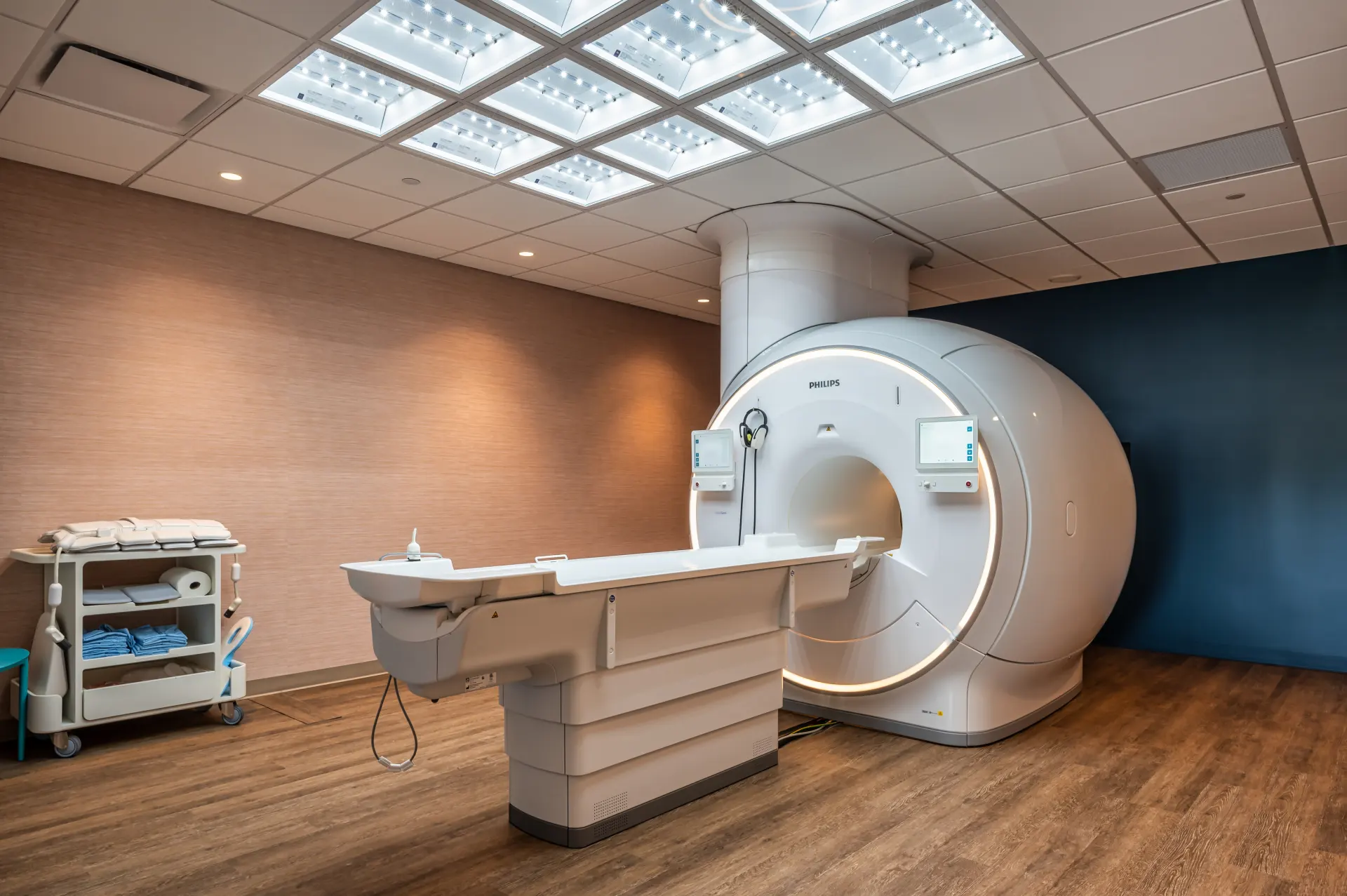
When is the right time for a pre-pregnancy whole body MRI?
If you’d like to know more about your pre-pregnancy health, you may choose to schedule a whole body MRI before trying to conceive. This leaves time to review your results with your healthcare provider and determine whether any findings warrant follow-up testing, monitoring or treatment. For example, if the scan identifies fibroids, your OB-GYN can assess whether they require further evaluation before pregnancy. Your results may also help inform health goals you want to work toward over time, such as building muscle.
Unlike X-rays and CT scans, MRI does not use ionizing radiation. And Prenuvo Whole Body Scans don’t use contrast dyes. But Prenuvo does not perform screening MRI during pregnancy. While there is no proven evidence that a non-ionizing radiation, non-contrast MRI can harm a developing embryo, there are concerns about the loud sounds produced during imaging and increases in amniotic fluid temperature. For this reason, Prenuvo takes a precautionary approach and avoids elective screening scans during pregnancy or if you think you are pregnant.
Building your pre-pregnancy health routine
From choosing a prenatal vitamin to eating healthy and staying active, there is a lot that you can do to prepare yourself for pregnancy. A good place to start is to schedule a preconception visit to talk through your doctor’s recommendations. But you may also want to take a broader look at your health before you start trying to conceive.
A Prenuvo Whole Body Scan can be one part of that bigger picture, by providing additional information about your health. Paired with Prenuvo Blood Panels and other advanced assessments, it can provide an even more detailed look at your health, from your organs and body composition to biomarkers related to inflammation, hormone balance, metabolic health and more.
Fertility is a multifaceted process influenced by factors such as individual health, age and hormone levels. Preparing for pregnancy can include supporting your overall health and addressing known concerns with your healthcare team. Prenuvo can provide additional information to help inform those conversations before pregnancy.
To learn more about a Prenuvo Membership, Whole Body Scan, or other services, book a call with the Patient Services Team.
Related: What 83,846 Prenuvo scans revealed about women’s health